Navigation & IA
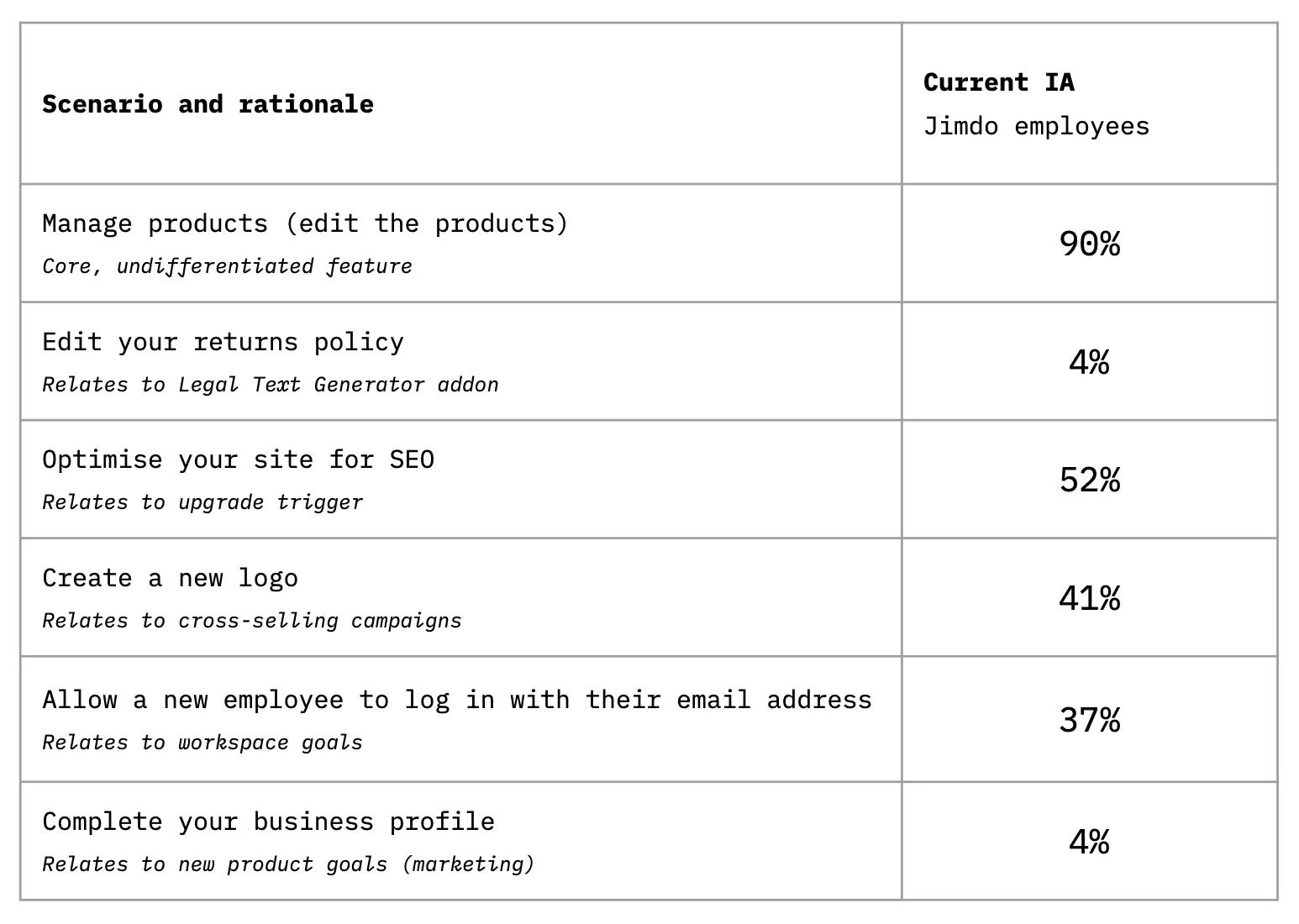
Jimdo's website builder had sprouted five years of add-ons with no shared map, just as 'use more than one of them' became the strategy. Only 4% of Jimdo's own staff could complete the core cross-product journeys in a tree test. I turned that into evidence, an IA, and a navigation that shipped.
One in twenty-five
Jimdo is a website builder, and it wants to be the easiest one going. Like any application with a userbase though, features and add-ons took their toll on discoverability and memorability, though.
Across dozens of user interviews we kept hearing the same thing, that the navigation itself was a barrier. People could use a feature happily - once they found it. Finding it, or remembering where it lived next time they wanted to use it, was the problem. And it was about to matter far more, because “do more than one thing in Jimdo” was becoming the company’s whole strategy, expanding into financial services and advertising.
Combing old usability studies, fresh moderated tests, Help Centre data, support tickets and custom FullStory filters, we found that roughly one support ticket in ten came straight from navigation and IA.
To really ram it home, we ran a tree test on Jimdo’s own staff and management, away from the familiar visual navigation so muscle memory couldn’t bail them out, and on the core cross-product journeys (the ones meant to upsell people to pricier plans) only 4% reached the goal.
Iteration
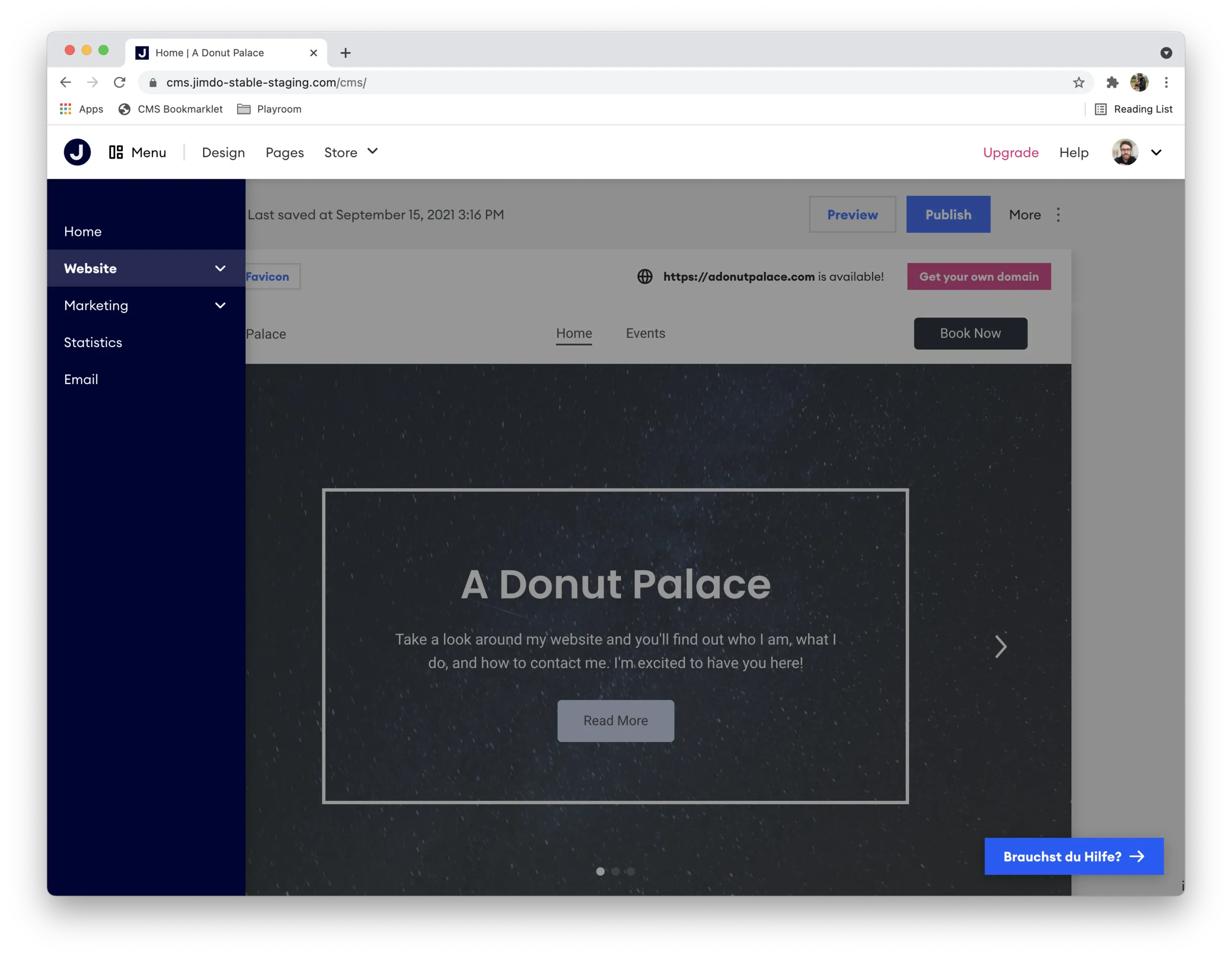
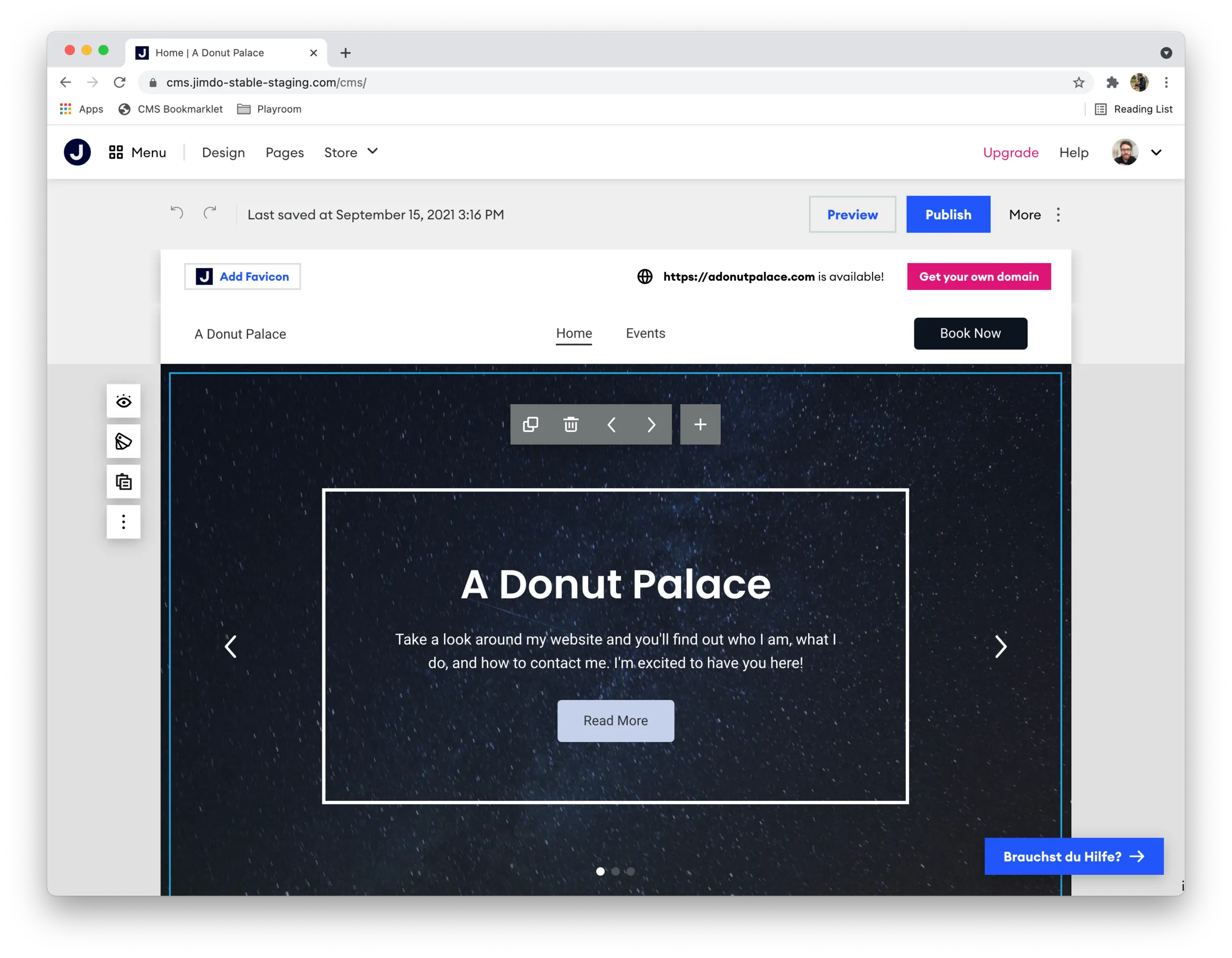
Once we’d got some institutional buy-in we had to figure out a fix that could actually ship. We took a content inventory of every product journey and ran a workshop with content design, product and marketing to find plainer terminology and a clearer hierarchy, then tree-tested the new structures against that staff baseline. Almost everywhere we found huge improvements.
Then the architecture pushed back. Each product team had grown up with its own stack, its own framework, its own components and logics. A proper top-level navigation that deep-linked cleanly across all of them would have been a vast rework nobody had the budget for. So the ambitious concepts had to be reshaped into something simpler and more realistic, with a longer-term plan for deeper integration as budgets allowed.
Tree tests, FullStory, and an IA built to extend
I built the FullStory filters to watch people navigate directly, and ran the tree tests and Maze studies that turned “the nav feels bad” into numbers a sceptic couldn’t wave away.
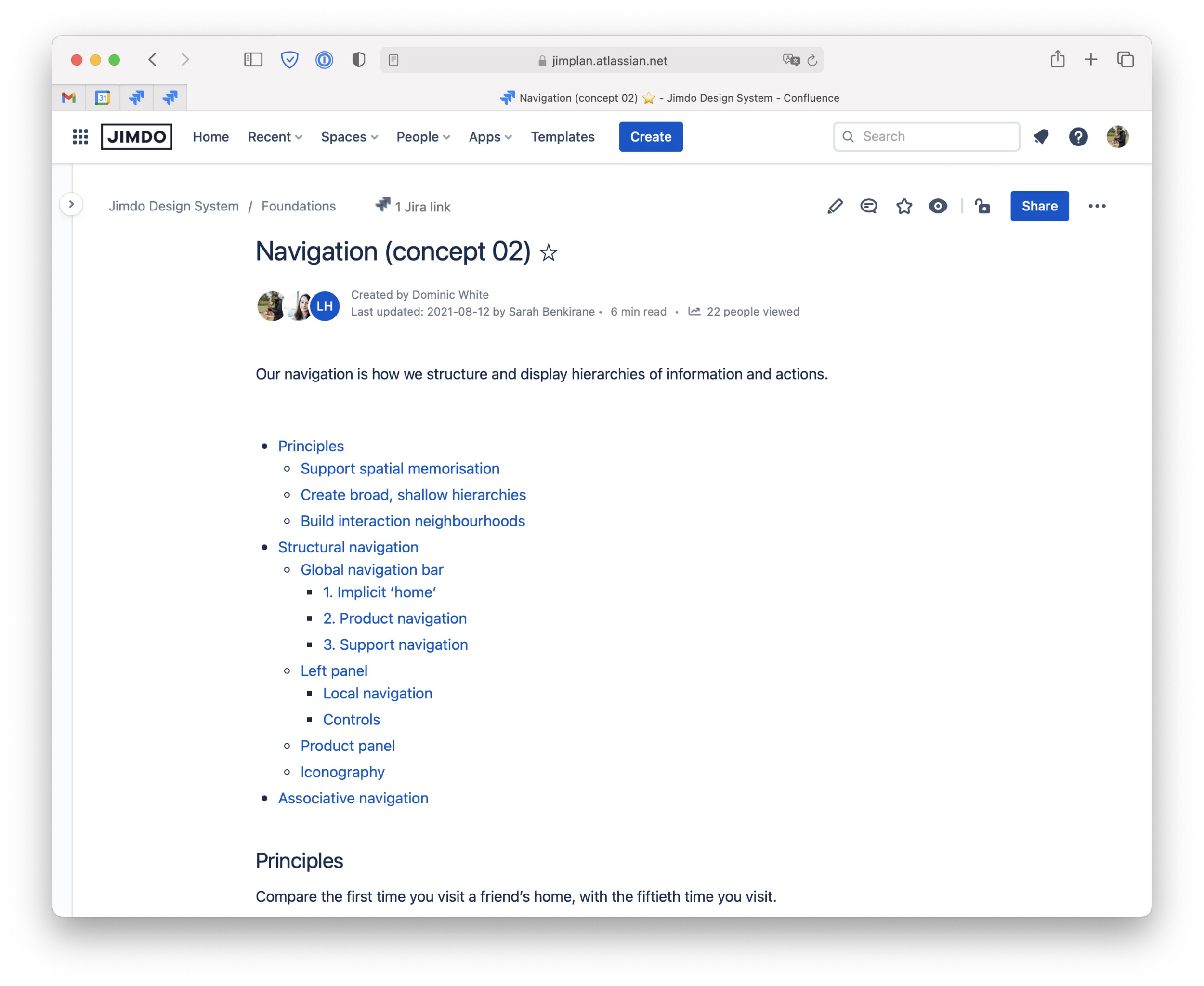
The IA rested on a few explicit principles (support people’s spatial memory, keep hierarchies broad and shallow, group features into interaction neighbourhoods) and was documented, with the reasoning and the ways to extend it, so the next person wasn’t guessing.
What I owned
I was the person who turned the complaint into evidence and the evidence into a design. I built the FullStory analysis, the IA prototypes and the Maze tests, wrote the test scripts, and ran the sessions alongside a user-research partner.
The documentation of the IA and how to extend it was mine too. Where I was one voice among several was the cross-functional workshop, the terminology, and the engineering of the shared component, which was a genuine team effort.
Tools: Figma, Maze, Playroom, FullStory, Confluence.