Canyon
An AI assistant that lets anyone understand and act on their cloud infrastructure just by asking in plain language. Conceived, designed and built in four weeks, then handed to strangers on the KubeCon show floor.
Shortcuts to knowledge
Humanitec is an Internal Developer Platform; the control plane developers use to describe and provision infrastructure for cloud applications. It holds an enormous amount of ground truth about a business. Every app, every environment, every database and queue and DNS record and how they all hang together.
The trouble was that all of this information stayed locked behind the platform itself. To answer a question as ordinary as “what’s actually in production, and what does it depend on?” you’d need to know Humanitec’s data model, its CLI and API, it’s IA.
It is early 2025 - our C-level folk are getting antsy to have an AI angle, a way to prove that we’re engaging with the hype. KubeCon is coming, four weeks away, and we want something to prove we’re the future.
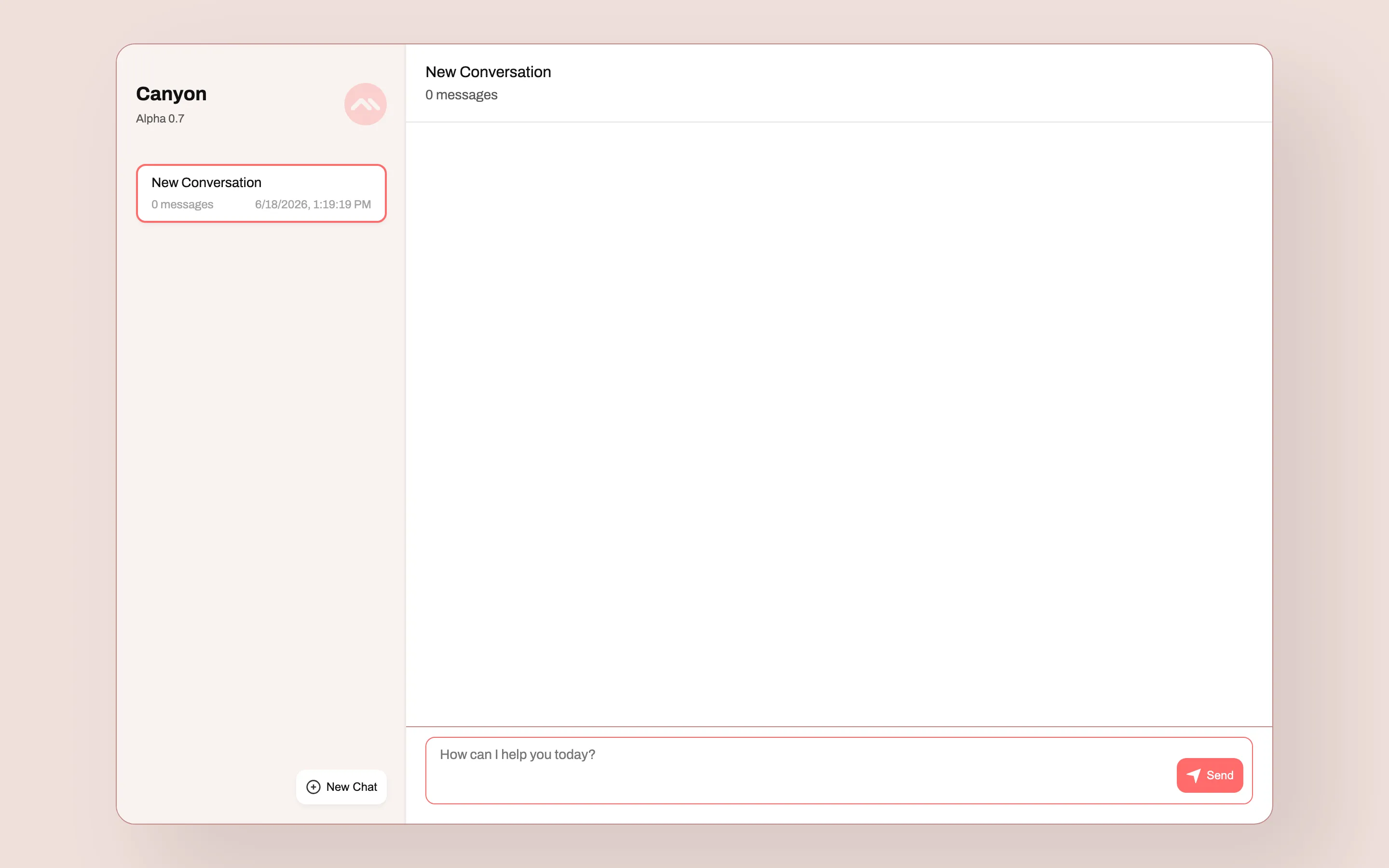
Canyon was our answer: a Gemini-powered assistant you talk to like a colleague, that reads a live organisation and draws it back to you in a way everyone in your team can understand.
Two minutes with a stranger
The obvious risk with “just talk to it” is the blank box. A stranger has thirty seconds and no idea what the thing knows or what they’re allowed to ask. So the cold-start wasn’t really a product feature, it was a piece of theatre: we wrote a short roleplay script tuned to roles of the visitor. “Ask it to show you X”, “now ask what depends on Y”.
The other hard part was reliability. A confident AI in front of strangers can be a liability - we’d spent a lot of our research time talking to CTOs terrified of hallucination and worried about agents running amok. I spent the week before the show hunting edge cases, watching the system prompt grow into a behemoth. We made a deliberate trade: the agent could only run a tightly limited, deterministic set of tools through our MCP server, buying trust at the cost of openness and power.
On the day it held up. When people took it home and roamed closer to the fence: every so often we’d get an email saying it had hallucinated a bit of infrastructure that wasn’t there.
Graph theory
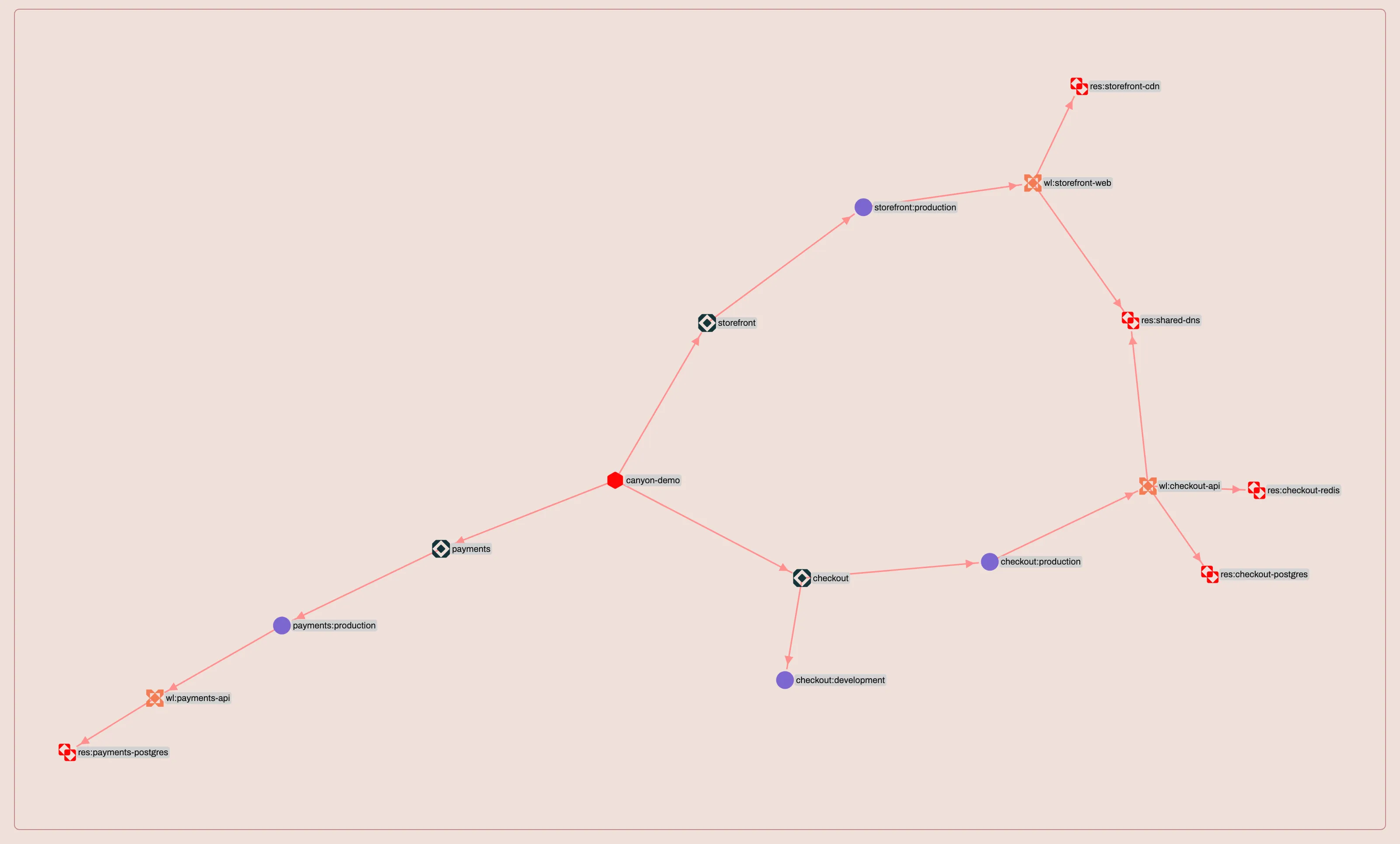
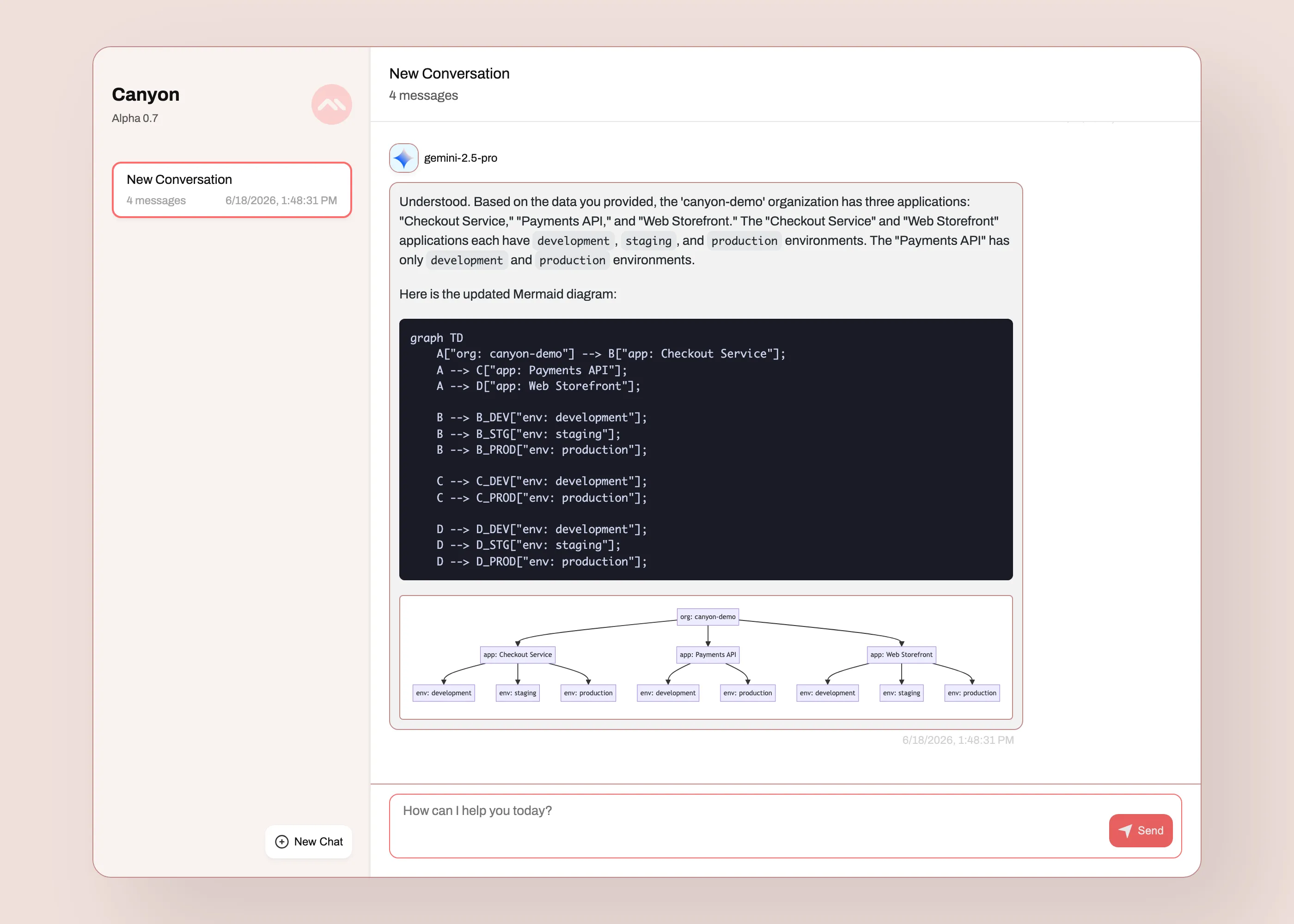
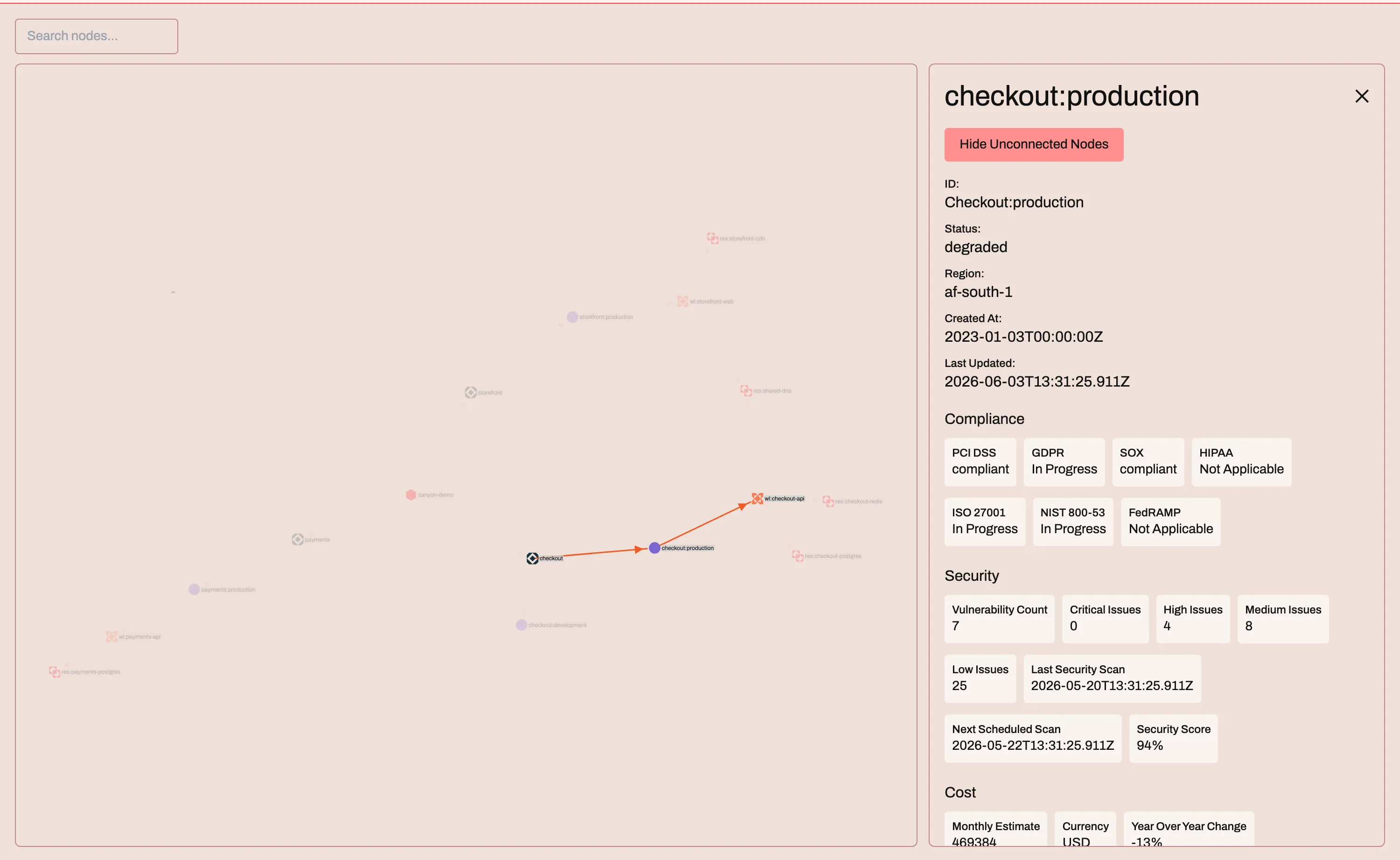
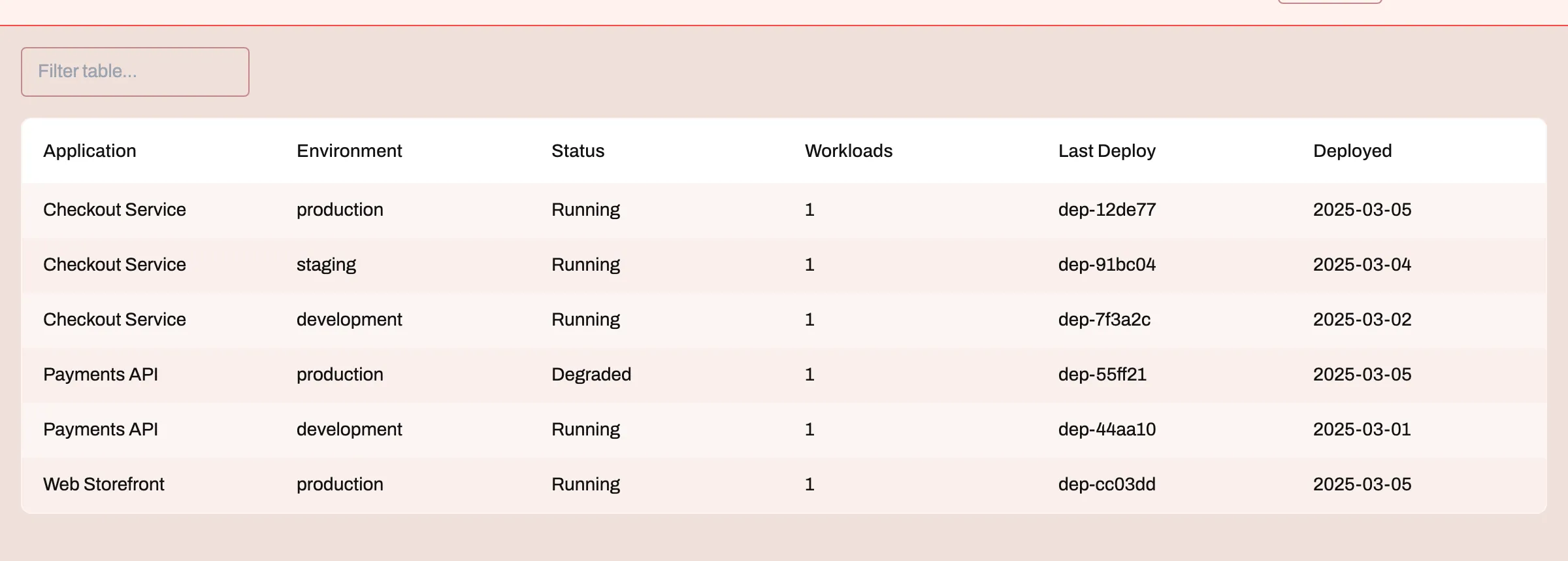
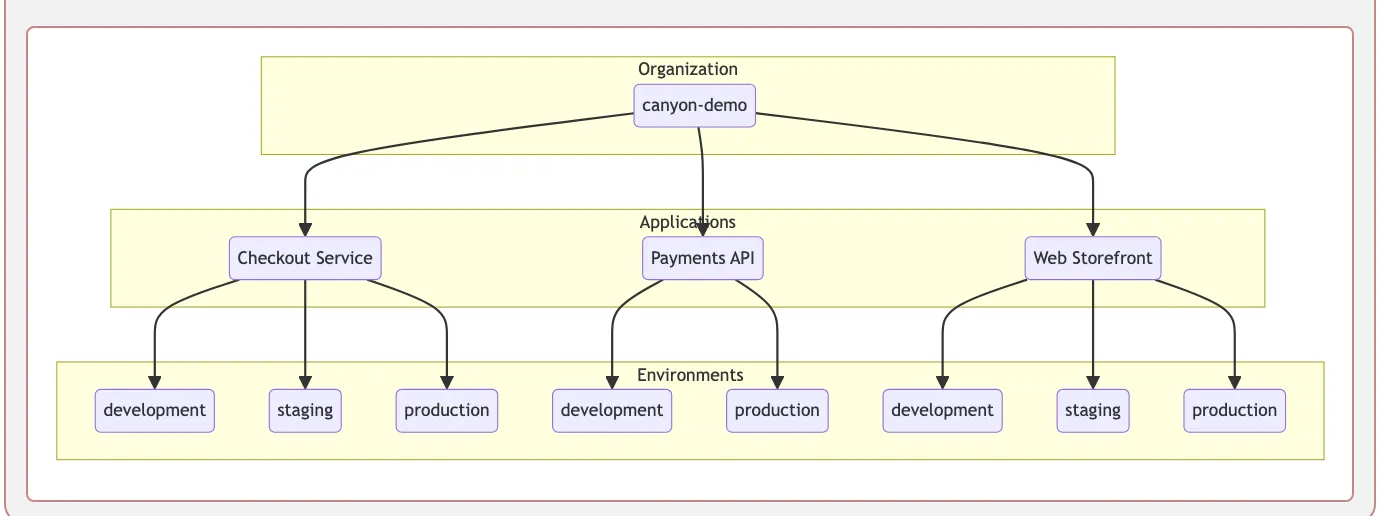
This was the part I cared about most. Text is a horrible way to explain a system of moving parts, so the most important thing Canyon does is draw your infrastructure. For a whole estate it renders an explorable, force-directed graph: every application, environment and workload alongside the databases, caches and DNS they depend on, each kind of thing with its own mark, so the shape reads at a glance. Click a node and it opens up: status, region, last change, compliance, open security issues, even running cost, the sort of context that normally lives across five different tools. And because it’s structured data underneath, Canyon renders whichever way the question needs. Ask how one app is wired and it lays out a clean diagram. Ask for the numbers and it builds a filterable table.
Sprinting Together
A colleague wrote the Go MCP server that talks to Humanitec, and the CLI already existed. I designed and built everything else in four weeks: the chat product, the way it turns answers into visualisations, the routing, the usage analytics, and the onboarding. The piece I’m proudest of is how someone gets in. No email, no account, no waiting, just an obfuscated single-use URL that’s theirs alone, behind which I provisioned a private instance in Fly.io backed by its own demo organisation, pre-seeded with realistic data and a CLI login. A person could go from asking for a demo to genuinely poking at real platform-engineering concepts, in a couple of minutes, on their own device, in the middle of a conference hall.
Doing numbers
148 people signed up at the booth on the day, which for a thirty-second conversation in a noisy hall isn’t too bad. Canyon is still going under its own steam, and I carried the lessons (constrain the agent for trust, design the cold-start, never trust a blank box) straight into Statecraft’s onboarding.
Tools: Figma, Next.js, Model Context Protocol, Gemini, Humanitec, Fly.io.